Shared heritage
One story, told in two countries.
More than 160 years connect a sugarcane plantation in Natal to a strategic partnership signed at the Red Fort. This is the history INDSAF was founded to carry forward.
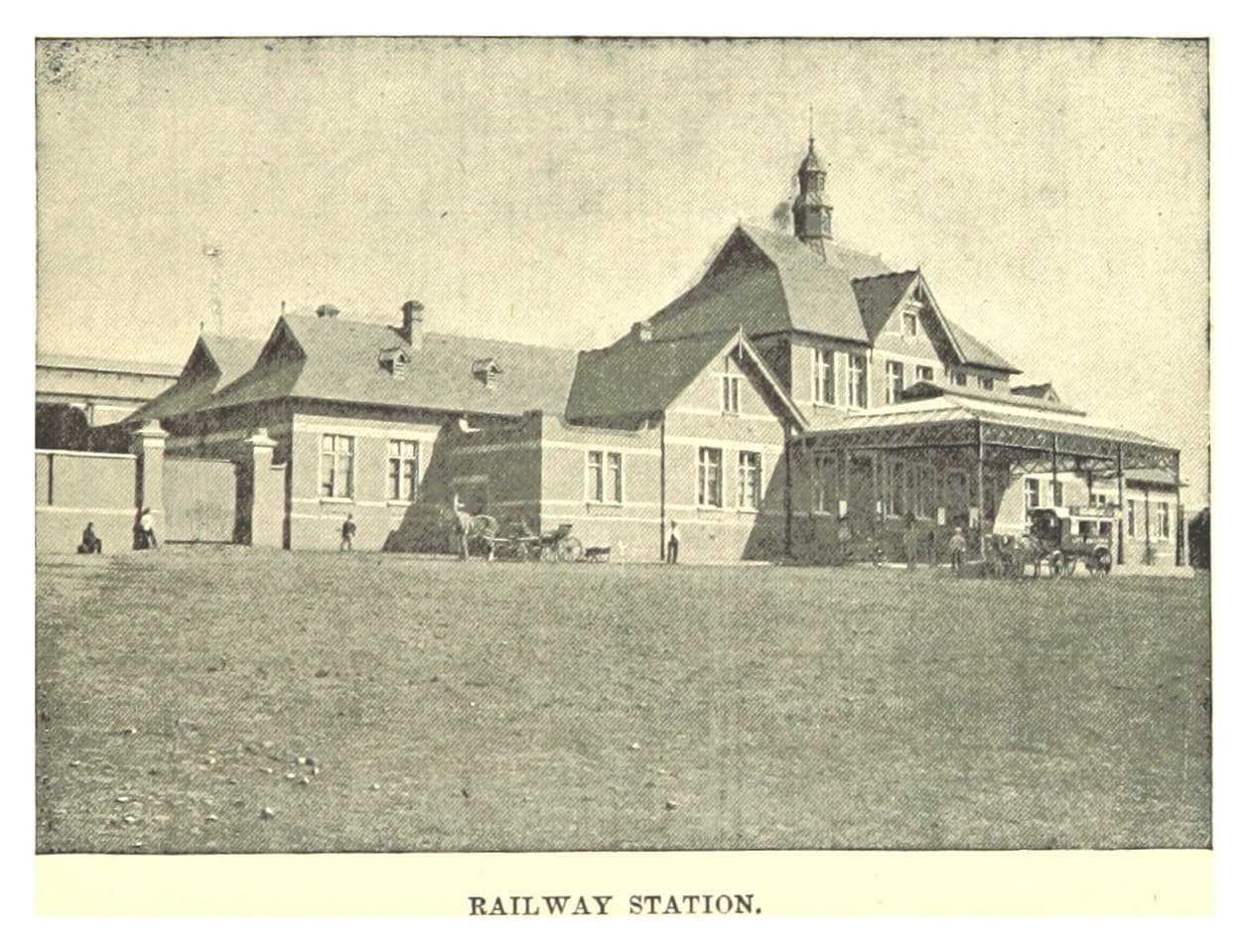
Above: Pietermaritzburg station in 1898. In 1893 a young attorney named Mohandas Gandhi was removed from a first-class carriage here.
Timeline
Twelve turning points
From the arrival of the Truro to South Africa's accession to BRICS.
1860
The Truro reaches Natal
The first 342 indentured labourers arrive from Madras aboard the Truro, followed by the Belvedere from Calcutta. Roughly 200,000 Indians would arrive over five decades to work the sugarcane plantations, coal mines and railways of the Natal Colony.
1860s–90s
Passenger Indians
Traders, largely Gujarati and later joined by Konkani and Urdu-speaking migrants from Uttar Pradesh, pay their own passage as British subjects. Operating first in Durban, they expand inland along the Johannesburg–Durban road.
1893
Gandhi arrives
M. K. Gandhi lands in South Africa to represent an Indian businessman in a legal dispute. Confronted with racial discrimination and a bill to strip Indian voting rights in Natal, he organises resistance and founds the Natal Indian Congress, uniting South African Indians for the first time.
1904
A permanent community
Indians outnumber whites in Natal. What colonists had treated as temporary labour has become a settled population with its own institutions, newspapers and trade.
1946
India takes apartheid to the world
India raises the treatment of Indians in South Africa at the United Nations and severs trade relations, among the first nations anywhere to impose sanctions on the apartheid state.
1950
The Group Areas Act
Indians are forcibly moved into designated townships, their movement restricted and their schooling made deliberately inferior. The Population Registration Act initially classifies them as part of the Coloured population.
1983
The House of Delegates
The Tricameral Parliament offers Indian and Coloured minorities limited participation in separate, subordinate houses. Turnout is very low; the arrangement is dismantled in the negotiations from 1990 onward.
1993–94
Diplomatic relations restored
With apartheid's end, India and South Africa formalise diplomatic relations. Nelson Mandela is later honoured with both the Bharat Ratna and the Mahatma Gandhi Peace Prize.
1997
The Red Fort Declaration
Signed in March by Prime Minister H. D. Deve Gowda and President Nelson Mandela, the declaration sets the terms of a strategic partnership between the two republics.
2003
IBSA
The Brasília Declaration of 6 June establishes the India–Brazil–South Africa Dialogue Forum, giving the partnership a trilateral platform among major democracies of the global South.
2006
The Tshwane Declaration
Signed in October, it reaffirms the strategic partnership and commits both governments to long-term cooperation across sectors, with a pledge to treble trade volume.
2011
South Africa joins BRICS
South Africa accedes to BRICS, placing the two countries together in the principal grouping of large emerging economies, alongside their shared seats at the G20, IORA and the WTO.
1860 to 1911
Indenture, and the making of a community
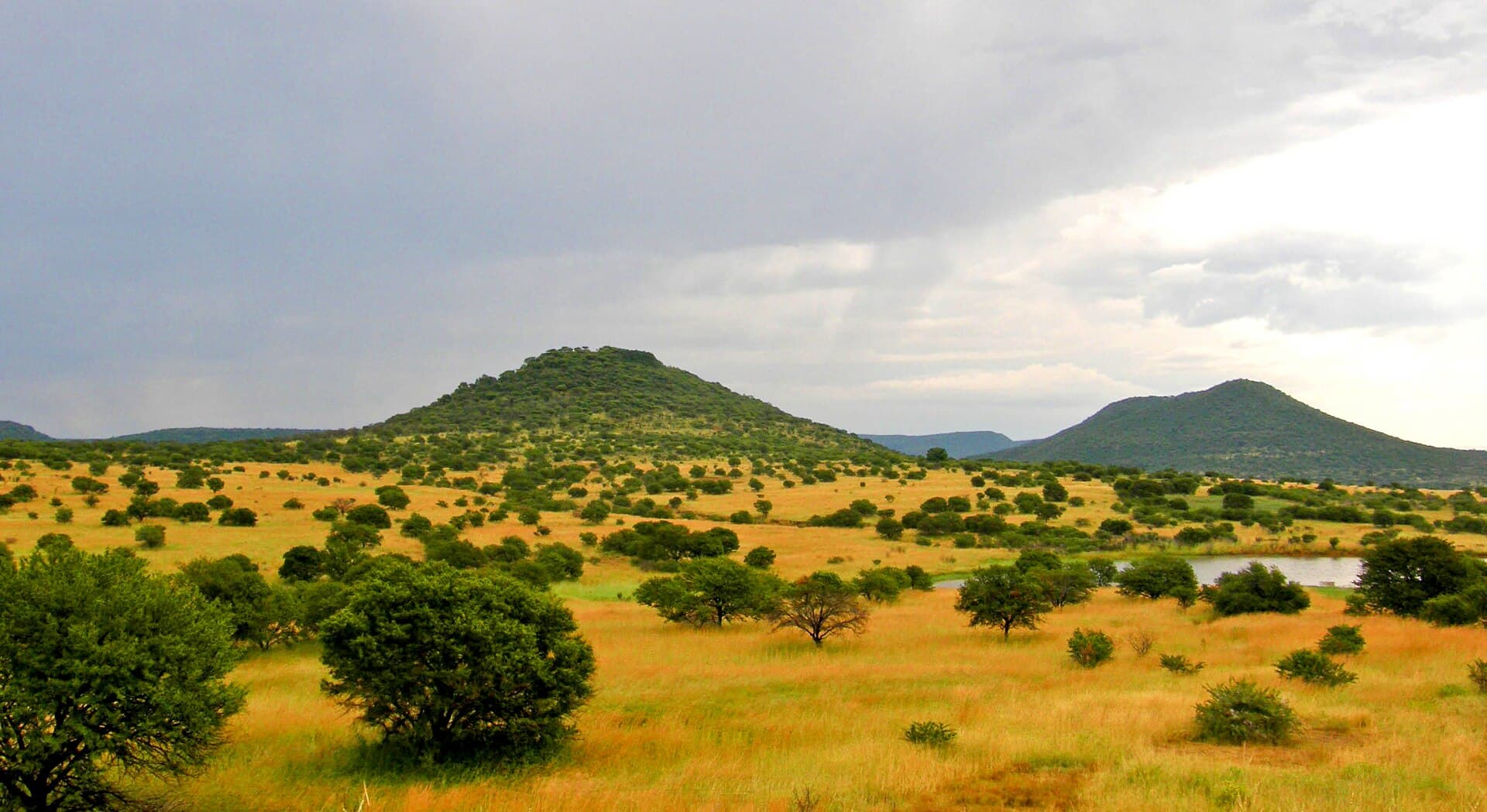
The modern South African Indian community descends largely from Indians who arrived from 1860 onwards. The first 342 came aboard the Truro from Madras, followed by the Belvedere from Calcutta. In total, roughly 200,000 Indians arrived as indentured labourers over five decades: first for the sugarcane plantations of the Natal Colony, later as coal miners and railway workers.
They spoke Tamil, Telugu, Bhojpuri and the Awadhi dialect of Hindi. The majority were Hindu, with Muslim and Christian minorities. Conditions on the plantations were frequently brutal and unsanitary; labourers who returned to India at the expiry of their terms alerted authorities there to the abuses, which forced new safeguards before further recruitment was permitted.
Those who stayed established themselves as an indispensable general labour force: as industrial and railway workers, as market gardeners growing most of the vegetables consumed by the white population, as fishermen, clerks, postal workers and court interpreters.
The traders
Passenger Indians
A second migration followed close behind: traders and others who paid their own fares and travelled as British subjects. They came from varying religious backgrounds and largely from Gujarat, including Memons and Surtis, and were later joined by Konkanis and Urdu speakers from Uttar Pradesh. Muslim traders played a central part in establishing Islam in the areas where they settled.
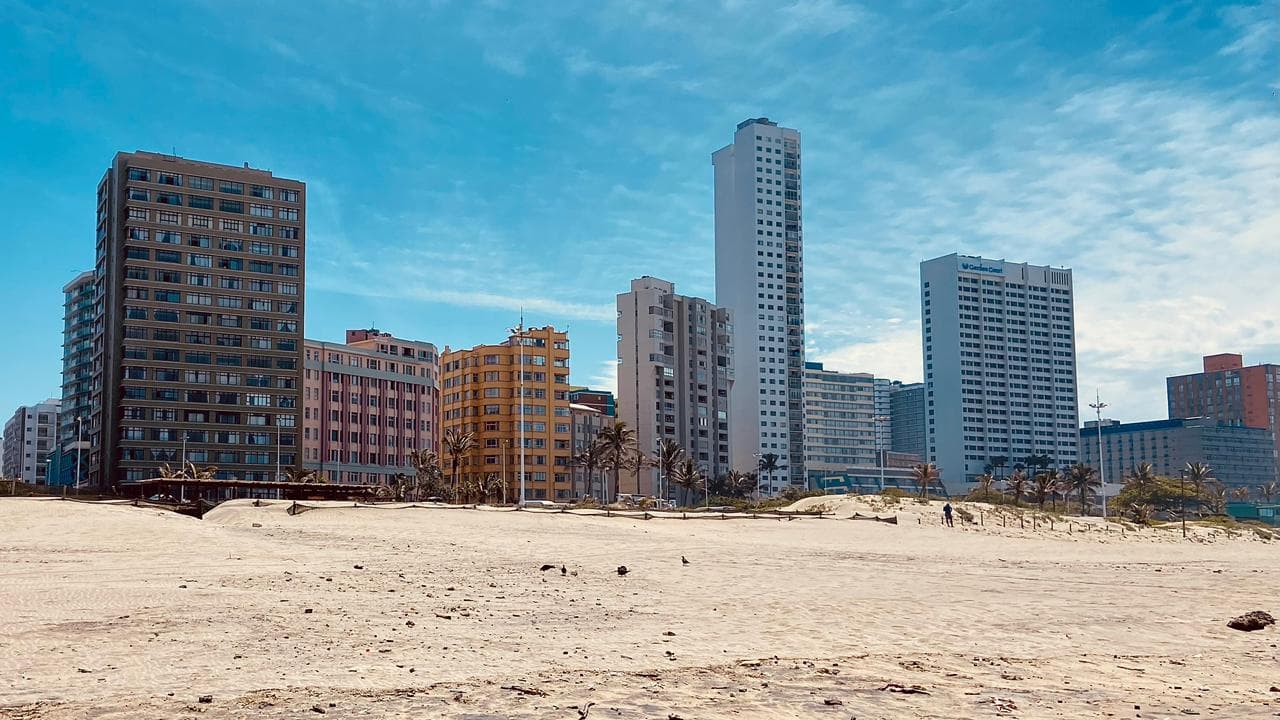
Operating first in Durban, they expanded inland to the Transvaal, founding communities along the main road between Johannesburg and Durban. Natal's Indian traders rapidly displaced small white shop owners in trade with other Indians and with black South Africans, provoking resentment that would shape decades of discriminatory legislation.
An earlier trace survives from long before: Kalaga Prabhu, a Goud Saraswat Brahmin merchant of Cochin, was exiled for life to the Cape of Good Hope with his son and their families by the Dutch in 1771. No further record of his descendants exists.
1893 to 1914
The lawyer who arrived for one case
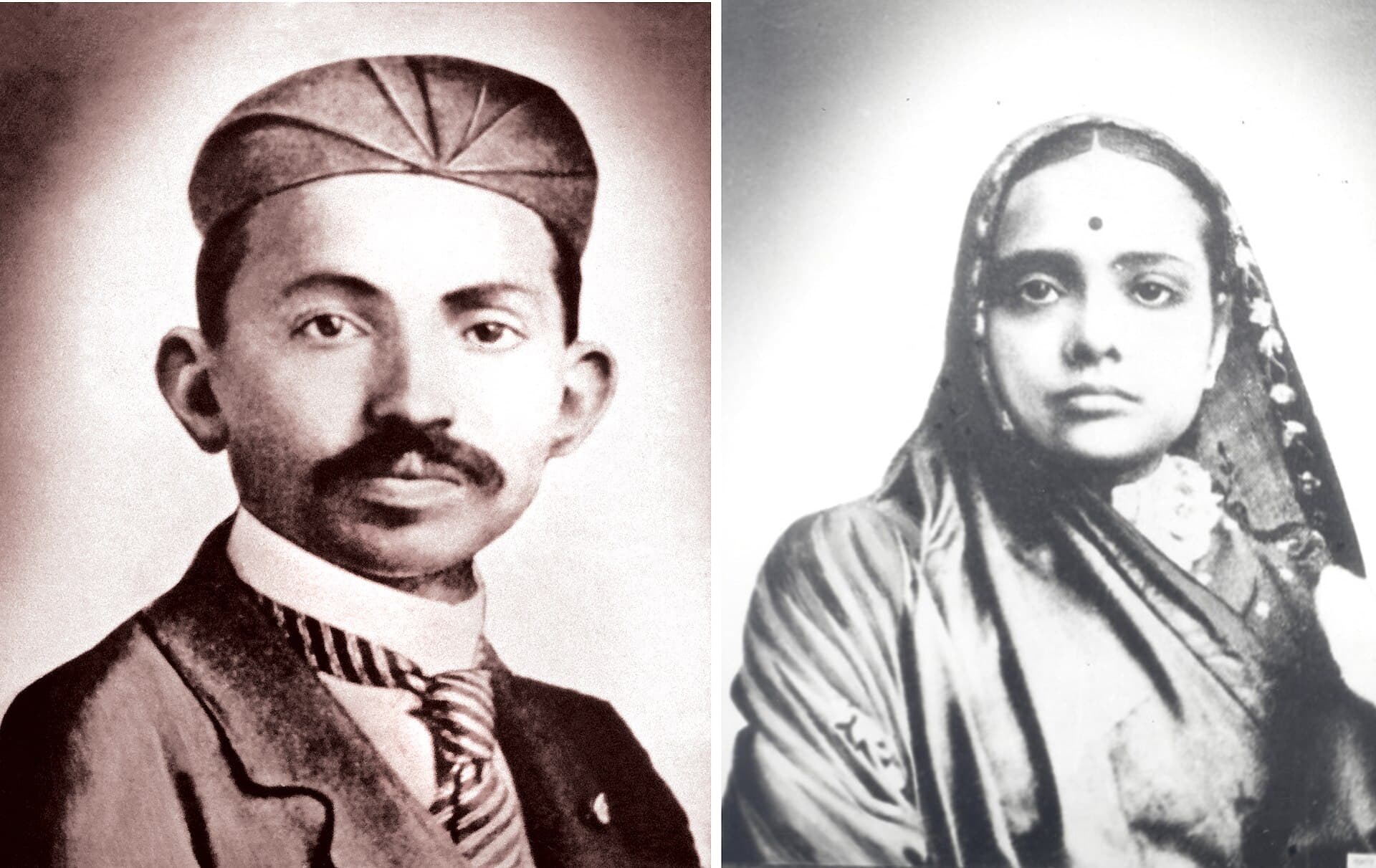
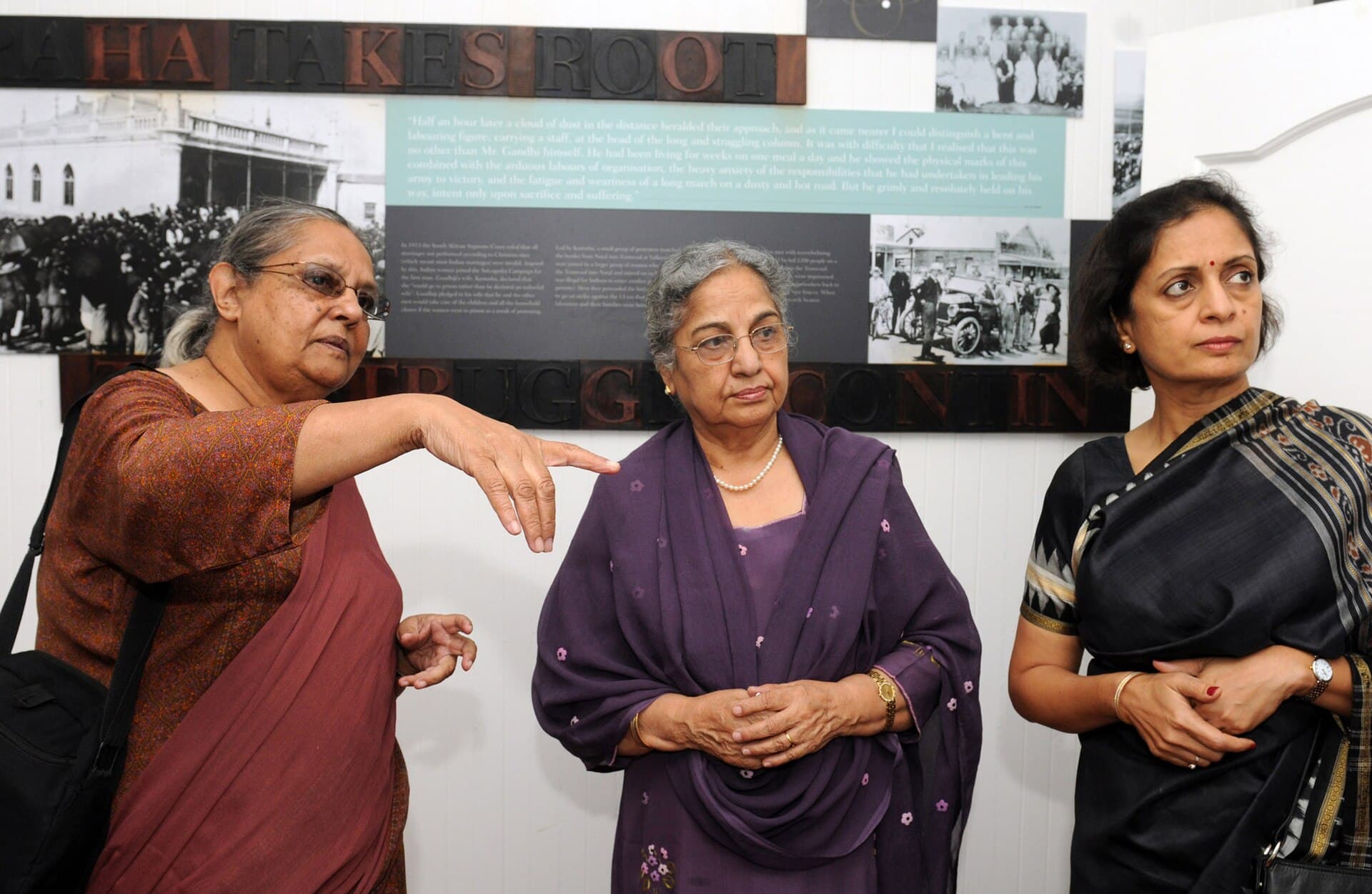
M. K. Gandhi arrived in South Africa in 1893 to represent an Indian businessman in a legal dispute. He met racial discrimination almost immediately. When legislation was proposed to restrict Indian voting rights in Natal, he helped organise the resistance that became the Natal Indian Congress, the first time disparate groups of South African Indians were united in a single body.
The bill was defeated, then successfully reintroduced in 1896. But the method Gandhi developed in those years would return to India with him and remake the freedom struggle there: disciplined, collective, non-violent resistance.
Discrimination was not uniform. In Natal, Indians were forced to carry passes from 1888. The South African Republic barred them from the mining industry and from the pavements of the Transvaal. In the Cape Colony they could own property, vote and trade freely. In the Orange Free State an 1891 statute prohibited them from living there at all, an absence that persisted into the apartheid era.

1948 to 1994
Apartheid, and India's dissent
India raised the treatment of Indians in South Africa at the United Nations in 1946 and severed trade relations. It was among the first countries anywhere to impose sanctions on the apartheid state, a position it held for nearly half a century.
Inside South Africa the machinery tightened. The Durban riots of January 1949 killed 142 people and injured 1,087, destroying 58 shops, 247 dwellings and a factory, with poor Indians bearing the worst of it. The Group Areas Act of 1950 forced Indians into designated townships and restricted their movement; the Population Registration Act initially classified them as part of the Coloured population; and state policy gave them a deliberately inferior education.
Recognition came grudgingly and on the state's terms. Indians were acknowledged as a permanent part of the population in 1961. The South African Indian Council followed in 1968, reconstituted in 1974 to allow half its members to be elected. In 1981 just 6% of eligible voters took part. The Tricameral Parliament of 1983 gave Indians a subordinate House of Delegates, and drew the same verdict at the polls.
Community built what the state withheld. The University of Durban-Westville was funded rand-for-rand by Indian South Africans and the government in the 1970s; before it, Indian students took a ferry to an abandoned prison on Salisbury Island that served as their university.
Since 1994
Two republics, one table
Many Indians had played a significant part in the anti-apartheid struggle, and some took positions of power in the democratic state that followed. Indians who were citizens before 1994 are recognised as having been disadvantaged under apartheid, and are eligible for employment equity and Black Economic Empowerment provisions.
Between the two governments, the relationship was rebuilt quickly. Diplomatic relations were formalised in 1993–94. The Red Fort Declaration of March 1997, signed by Prime Minister Deve Gowda and President Mandela, established a strategic partnership; the Tshwane Declaration of October 2006 reaffirmed it and committed both sides to trebling trade. Mandela himself received the Bharat Ratna and the Mahatma Gandhi Peace Prize.
Bilateral trade grew from about US$ 3 million in 1992–93 to US$ 4 billion by 2005–06, and reached US$ 10.06 billion in the eight months to November 2025. The two states now sit together in BRICS, IBSA, the G20, IORA, the WTO and the Commonwealth, and their navies have exercised together as IBSAMAR since 2008.
Where this leads
A history is only useful if it obliges you to do something.
INDSAF's work begins from this record and is accountable to it: sectoral forums, an annual honour for global Indian achievement, and a standing case for strategic partnership.
Sources
- India Brand Equity Foundation: India–South Africa trade
- Consulate General of India, Cape Town
- India–Africa Forum Summit 2026
- Statistics South Africa: Census 2022
- Historical detail on indenture, discrimination and the apartheid era follows the foundation’s own source document and the public record.